
How can we evaluate the effectiveness of a youth support programme when its impact extends beyond simply helping young people enter employment or education?
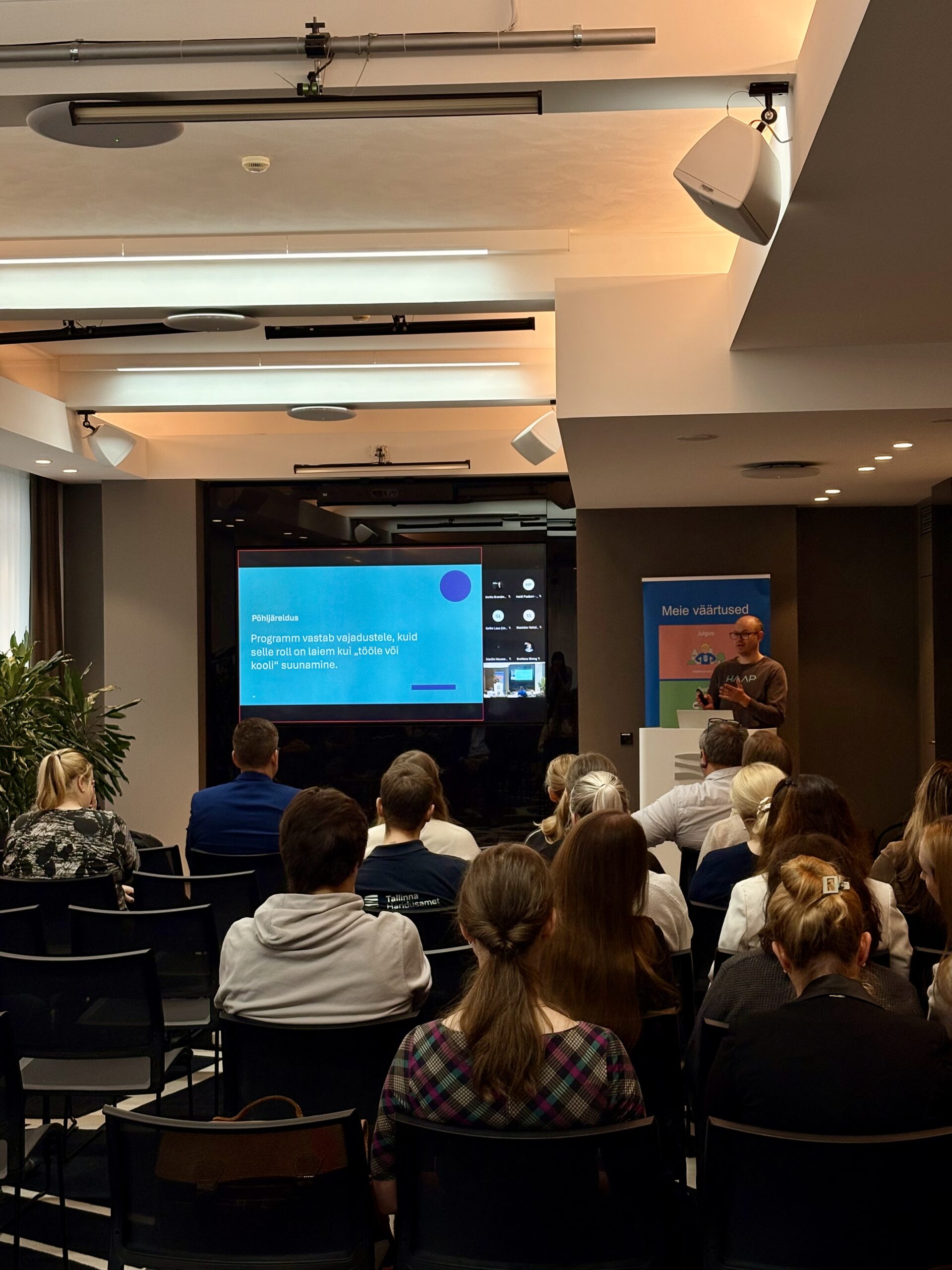
In 2026, HAAP Consulting conducted an analysis of the effectiveness and cost-effectiveness of the “Hoog sisse” youth support programme, commissioned by the Tallinn Education Department. The aim of the study was to evaluate the programme’s results in 2024–2025, understand how it operates in practice, and develop recommendations for its further improvement.
Young people’s exclusion from education and the labour market is a complex challenge, with underlying causes ranging from health issues and low self-confidence to financial difficulties and limited social skills. Young people who are not in employment, education or training (NEET) often require individualised, long-term support that takes their diverse needs and circumstances into account.
The central question of the analysis was to assess how effectively the programme helps young people enter education or employment, what other positive changes occur along the way, and how the programme’s costs compare with its outcomes and potential benefits to society.
How did we conduct the study?
We combined statistical analysis with qualitative research methods to evaluate the programme’s effectiveness through both measurable outcomes and participants’ experiences.
We began by reviewing programme documentation and monitoring data from 2024–2025, covering a total of 473 programme participation cases. We also conducted a cost-benefit analysis to estimate the programme’s potential financial benefits from the perspectives of the public sector as a whole and local government.
To complement the statistical findings, we organised two focus groups with programme specialists and managers, as well as 12 in-depth interviews with young people who had participated in the programme. These interviews provided deeper insights into participants’ individual experiences, the programme’s strengths and challenges, and the factors that support or hinder positive outcomes.
Combining different research methods enabled us to assess not only how many young people entered employment or education, but also how the programme supported their personal development and under what conditions sustainable outcomes could be achieved.
What did the analysis reveal?
The study highlighted that one of the programme’s greatest strengths is its individualised and flexible approach, built around a trusting relationship between young people and support specialists. Beyond entering employment or education, the programme’s value was reflected in increased motivation, self-confidence and independence, clearer future plans, and improved access to essential support services.
The analysis also demonstrated that evaluating the effectiveness of support programmes requires more than measuring final outcomes alone. It is equally important to recognise intermediate achievements that may lay the foundation for a young person’s eventual transition into employment or education.
The cost-benefit analysis suggested that the programme could generate substantial financial benefits for the public sector. However, the scale of these benefits depends on several assumptions, including how long participants remain employed. We therefore presented the estimates of financial returns as potential scenarios rather than definitive evidence of the programme’s causal impact.
Based on the findings, we developed recommendations for the programme’s further development, focusing on more systematic outcome measurement, improved data quality, better ways of reaching young people, and stronger cooperation between support services.
The project’s value lay in providing a comprehensive evaluation of the programme’s effectiveness by combining statistical evidence, economic analysis, and young people’s lived experiences. The study provided the client with practical insights to inform future programme development and funding decisions, while demonstrating how the broader value of complex social interventions can be measured more effectively.
HAAP Consulting helps organisations evaluate the effectiveness of programmes and services by combining data-driven analysis, target group experiences, and practical recommendations for improvement.